
Cosmetic Dentistry
Dental Bonding in Gladstone
Tooth-colored resin, shaped by hand.
Dental bonding is a conservative way to repair small chips, close narrow gaps or cover a stubborn stain. The resin is applied directly to your tooth and sculpted right in the chair.

Exceptional Dentistry in Gladstone, MO
What is dental bonding?
Dental bonding uses a tooth-colored composite resin matched to the shade of your natural teeth. The tooth surface is gently roughened and conditioned so the resin can grip it, then the material is applied in layers, shaped and hardened with a curing light. Once it has set, your dentist trims and polishes the resin so it blends with the enamel around it. Because the work is done directly on the tooth, bonding often requires little or no removal of healthy enamel. It is one of several cosmetic dentistry options, and it is also used to repair minor damage.
Common uses
What bonding can address
-
Chipped edges
Small chips along the biting edge can be rebuilt with resin that matches the rest of the tooth.
-
Narrow gaps
Resin can be added to the sides of teeth to make a small space less noticeable.
-
Discolored spots
A thin layer of resin can mask a stain that whitening does not reach.
-
Uneven shapes
A tooth that looks shorter or more pointed than its neighbors can be reshaped.
Your bonding appointment
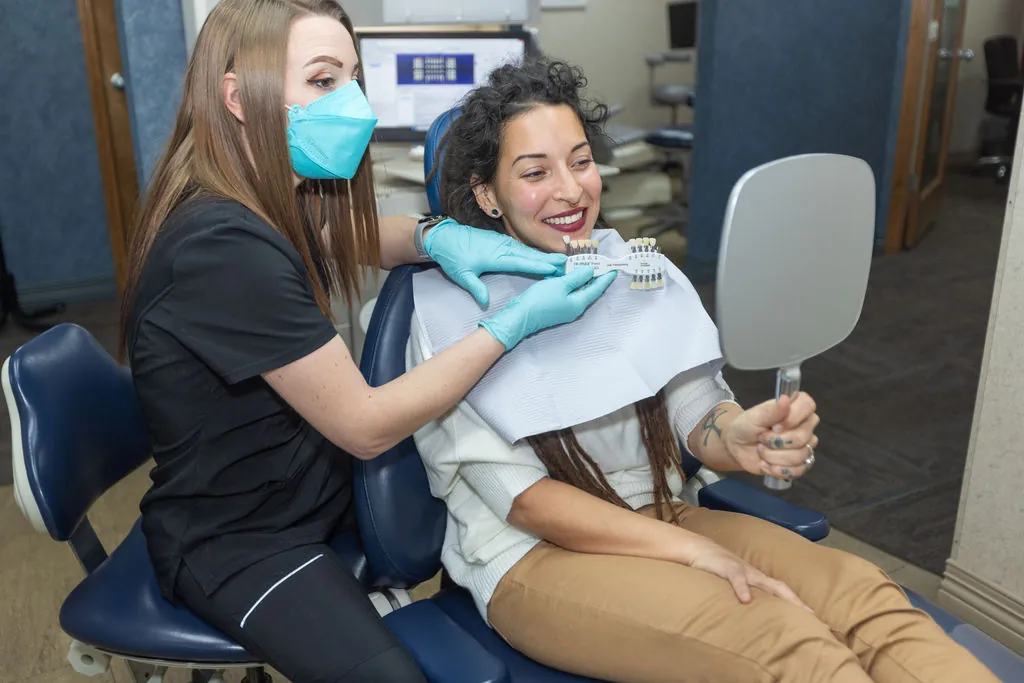
- Your dentist examines the tooth and chooses a matching resin shade
- The surface is prepared so the resin can bond to it
- Resin is applied, sculpted and hardened with a curing light
- The finished bonding is shaped and polished to match your enamel
Bonding after a knock or a fall
A chipped front tooth is often the first reason people ask about bonding. If a tooth has been injured, it is worth having it examined before any cosmetic repair, since a crack or damage below the surface may need attention first. Our tooth injury treatment page explains what to do after an accident.
Comparing options
Bonding or veneers?
Bonding and porcelain can solve some of the same problems. Resin is shaped directly on the tooth, while Veneers are made from porcelain outside the mouth and tend to resist staining better. Composite resin can pick up stains from coffee, tea and tobacco over time, so some people choose bonding for small repairs and porcelain for larger changes.
Cosmetic consultation
Free
Explore your options for a brighter, more confident smile
Our complimentary cosmetic consultation includes:
- Professional smile assessment
- Discussion of your goals & concerns
- Personalized treatment recommendations
- Information on teeth whitening, veneers, dental bonding & more
Book your visit
Ask about dental bonding
Bring the tooth that has been bothering you to a cosmetic consultation. We will look at it together and explain whether bonding or another option fits.
The short answer
Dental bonding is a cosmetic treatment in which tooth-colored composite resin is applied directly to a tooth, shaped and hardened with a curing light. The tooth surface is gently roughened and conditioned, the resin is applied in layers matched to your natural shade, and your dentist trims and polishes it to blend with the enamel around it. It is commonly used to repair small chips, close narrow gaps, reshape uneven teeth and cover discoloration, often with little or no removal of healthy enamel.
Dental Bonding FAQ
- Does bonding require numbing?
- Bonding often does not require numbing, especially when resin is only added to the surface of the tooth. Because the work is done directly on the tooth and usually removes little or no healthy enamel, many repairs can be done without it. Your dentist will let you know if numbing is recommended for your repair.
- Can bonded teeth be whitened?
- Bonded teeth can be whitened, but the composite resin itself does not change color with whitening gel. That means whitening after bonding can leave the resin a different shade from the teeth around it. If you plan to whiten, it is usually done first so the resin can be matched to your brighter shade.
- How do I care for bonding?
- Care for bonding the way you care for your natural teeth, by brushing and flossing as usual and keeping up regular checkups. Avoid biting fingernails, ice or other hard objects with bonded teeth, since the resin can chip. Composite resin can also pick up stains from coffee, tea and tobacco over time, so limiting those helps it keep its shade.
- Can bonding be repaired?
- Yes, bonding can be repaired. If the resin chips or stains, it can usually be touched up or replaced. Because bonding is applied directly to the tooth and shaped in the chair, a repair follows the same steps of preparing the surface, adding resin and polishing it to match.
Your dentist
Meet Dr. Emily Marx
A skilled family dentist, Dr. Marx is passionate about helping patients feel comfortable while achieving their best smile. Meet Dr. Marx