Restorative Dentistry
Crowns & Bridges in Gladstone
One restores a tooth. The other replaces one.
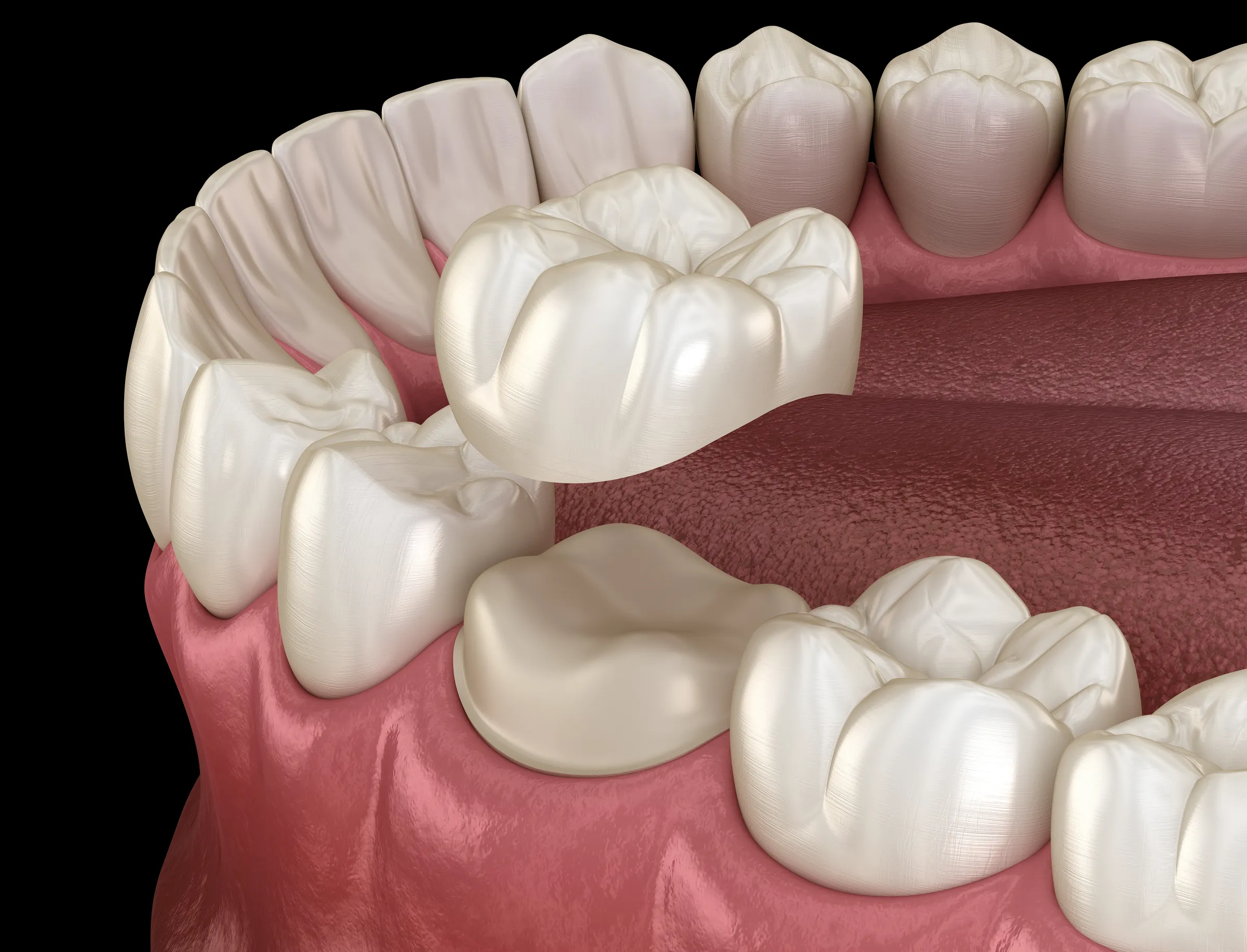
Crowns and bridges are often mentioned together because they are built the same way and cemented in place. The difference is simple: a crown saves a tooth you have, and a bridge fills the space left by a tooth you have lost.
Exceptional Dentistry in Gladstone, MO
Crown or bridge: where to start
If a tooth is still in your mouth but cracked, worn or heavily restored, a crown is usually the conversation. It fits over the whole visible part of the tooth, holding it together and giving it back a natural shape. If a tooth is already missing, a bridge closes the gap with an artificial tooth that is held in place by support on one or both sides. Both are fixed, so you do not take them out at night, and both are designed to match the color and contour of the teeth around them. This page is a quick guide; each option below has its own page with the full detail.
Restoring a tooth
Crown options
Start with our Dental Crowns page for when a crown is needed and how one is placed. Each material has its own strengths:
-
All-ceramic crowns
Metal-free and closely matched to your natural enamel. About all-ceramic crowns
-
Zirconia crowns
A very tough ceramic that suits teeth under heavy chewing. About zirconia crowns
-
Gold crowns
A classic metal crown often chosen for back teeth. About gold crowns
-
E4D same-day crowns
A ceramic crown designed and milled in our office and placed in one visit. About same-day crowns
Replacing a tooth
Bridge options
Our Dental Bridges page explains how a bridge works overall. The design depends on what is available to support it:
-
Traditional bridges
Anchored by crowns on the teeth at both ends of the gap. About traditional bridges
-
Cantilever bridges
Supported from one side only, where just one neighboring tooth is suitable. About cantilever bridges
-
Implant-supported bridges
Held by dental implants instead of natural teeth. About implant-supported bridges
How we help you choose
The right restoration depends on the tooth, the teeth beside it, your bite and your own priorities. Your dentist looks at all of it before recommending anything, often with digital X-rays and digital impressions, and explains the tradeoffs of each option in plain terms. Sometimes a smaller repair such as an inlay or onlay is enough, and sometimes a dental implant is worth considering instead of a bridge.
New patient special
$98
A $308 value for your first visit
Visiting us for the first time? Our new patient offer includes:
- Comprehensive exam
- Panoramic X-rays
- Bitewing digital X-rays
- Intraoral photos
- Smile evaluation
- Full gum evaluation
- Oral cancer screening
- TMJ and bite evaluation
- Review of your treatment options
- A written treatment plan
Book your visit
Not sure which one you need?
You do not have to work it out alone. Book an exam and we’ll look at the tooth or the gap together and walk you through the options that make sense.
The short answer
Crowns and bridges are fixed dental restorations: a crown covers and strengthens a single damaged tooth, while a bridge replaces one or more missing teeth. A crown fits over the whole visible part of a cracked, worn or heavily restored tooth, and a bridge holds an artificial tooth in the gap with support from crowns on neighboring teeth or from implants. Both are cemented or bonded in place and shaded to match the color and contour of the teeth around them.
Crowns & Bridges FAQ
- What is the difference between a crown and a bridge?
- A crown restores a tooth you still have, while a bridge replaces a tooth that is missing. A crown covers a single damaged natural tooth, holding it together and giving it back a natural shape. A bridge fills the gap by attaching an artificial tooth to crowns or implants beside the space. The two are often mentioned together because they are built in a similar way and are both fixed in place.
- Can a bridge use crowns?
- Yes, a traditional bridge is built with crowns. Crowns are placed on the teeth at each end of the gap and joined to the replacement tooth in the middle. Those supporting teeth are reshaped so the crowns can fit over them. Where only one neighboring tooth is suitable, a cantilever bridge supported from one side may be used, and implants can support a bridge instead of natural teeth.
- Are crowns and bridges removable?
- No, crowns and bridges are not removable. Both are cemented or bonded in place, so you do not take them out at night. You clean them much like natural teeth, by brushing and flossing every day. A bridge needs some extra attention underneath the replacement tooth, where food and plaque can collect.
- Which crown material is best?
- The right crown material depends on where the tooth is, how much chewing force it takes and how visible it is. All-ceramic crowns are metal-free and closely matched to natural enamel, which suits teeth that show when you smile. Zirconia is a very tough ceramic that suits teeth under heavy chewing, and gold is a classic metal often chosen for back teeth. Your dentist will look at the tooth and your bite and explain the tradeoffs before recommending one.
Your dentist
Meet Dr. Emily Marx
A skilled family dentist, Dr. Marx is passionate about helping patients feel comfortable while achieving their best smile. Meet Dr. Marx