
Dental Implants
Implant Retained Crowns in Gladstone
One missing tooth, one lifelike replacement.
When a single tooth is gone, an implant retained crown fills the space with a tooth that stands on its own root. It is shaped and shaded to sit naturally among the teeth around it.
Exceptional Dentistry in Gladstone, MO
Replacing a single tooth, root and all
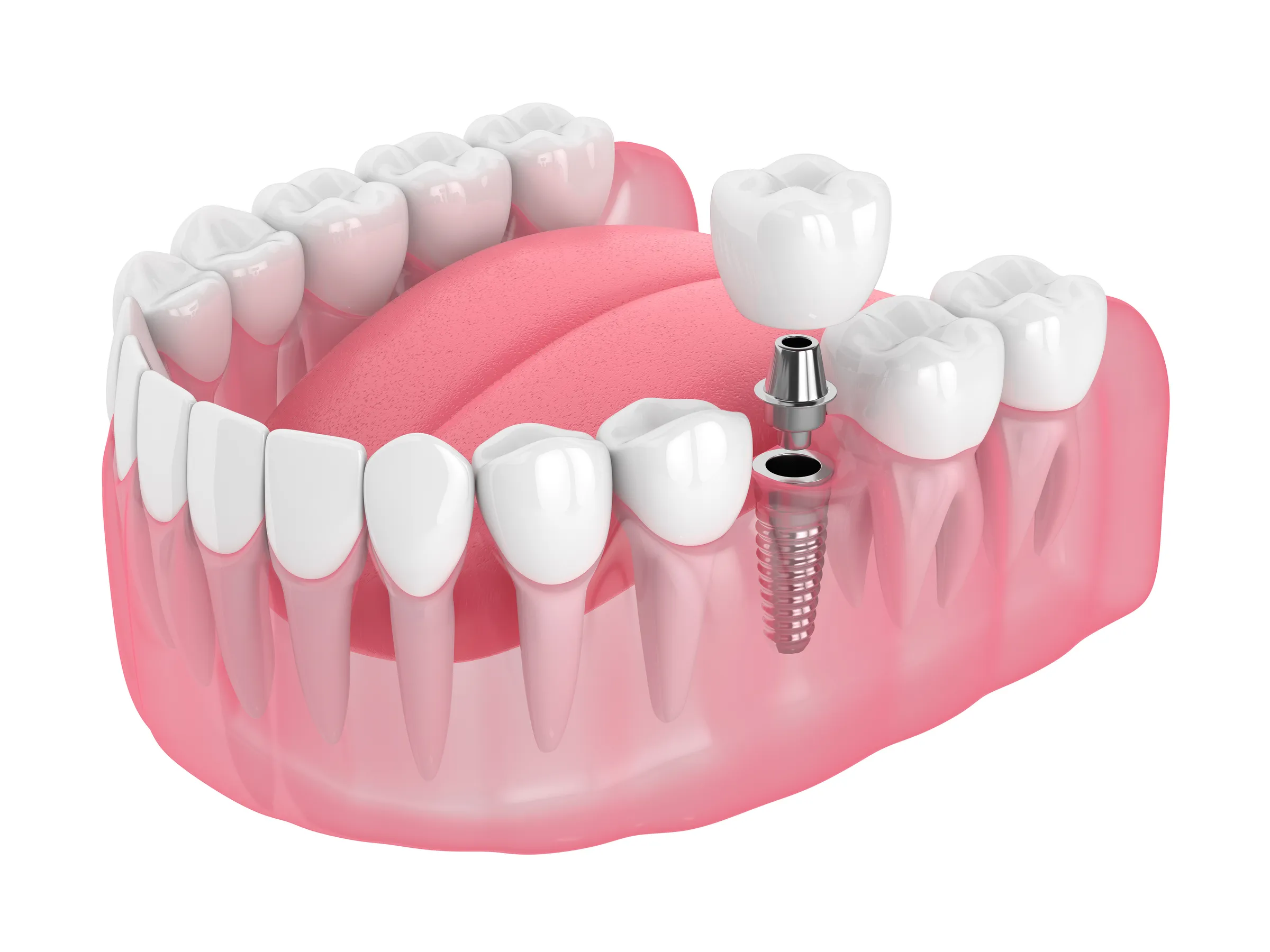
An implant retained crown is made of three parts that work together. The implant is a post placed in the jawbone where the root of the missing tooth used to be, and it is given time to join with the surrounding bone. An abutment then connects to the top of the implant, and a custom crown attaches to the abutment, either cemented or held with a small screw. Because the crown is supported by its own implant, the healthy teeth on either side do not have to be filed down to hold it, which is one of the main differences from a bridge. The crown itself is designed much like any of our Dental Crowns, matched in shape and color to your smile.
The path to your new tooth
Your dentist will explain the order of visits and what happens between them.
- An exam and cone beam CT imaging to study the bone at the gap
- Placement of the implant post in the jaw
- A healing period while the implant and bone join together
- Digital impressions of the implant and the teeth around it
- Attachment of the abutment and your finished crown, with a bite check
Dental implant consultation
$50
A $608 value
Missing teeth? For only $50, our team will evaluate your oral health and guide you through your implant options. Your consultation includes:
- Comprehensive oral exam
- 3D X-rays (CT scan) for precise planning
- Panoramic X-rays
- Personalized implant treatment plan
- Detailed information on the procedure
- Answers to all your questions
Is it the right fit?
Comparing single-tooth options
An implant crown is one of several ways to fill a single gap, and each has its own strengths.
-
Implant retained crown
Stands on its own implant, so neighboring teeth are left as they are. It is cleaned much like a natural tooth.
-
Traditional bridge
Uses the teeth beside the gap as anchors, which means those teeth are reshaped to hold crowns.
-
Partial denture
A removable option that can replace a tooth and clips to nearby teeth. It comes out for cleaning.
When more than one tooth is missing
If several teeth in a row are missing, placing an implant for each one is not always necessary. An implant supported bridge can span the gap on fewer implants. Our main dental implants page explains the full range of implant treatments.
Why choose Marx Family Dental for implant crowns?
A single implant crown sits right beside your natural teeth, so its shape, color and bite have to blend in. We plan it with your imaging, take the time to match your smile and check the bite carefully when it goes in.
Book a consultation
Replace a missing tooth with confidence
Schedule an implant consultation and we will look at the space, review your imaging and walk you through whether an implant crown suits your smile.
The short answer
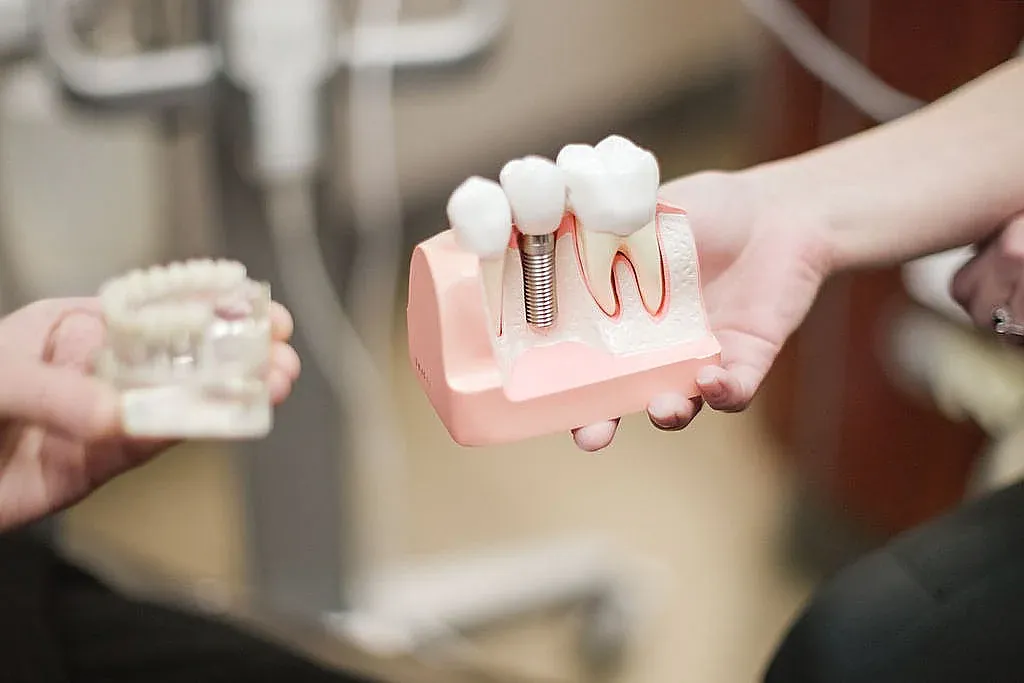
An implant retained crown is a replacement tooth attached to a dental implant, a post placed in the jawbone where a tooth is missing. After imaging and implant placement, the implant is given time to join with the bone, then an abutment is attached and a custom crown is cemented or screwed onto it. Because the crown stands on its own implant, the healthy teeth on either side do not need to be filed down to hold it, as they would for a bridge.
Implant Retained Crowns FAQ
- What is an abutment?
- An abutment is the small connector that attaches to the top of a dental implant and holds the crown. It sits at or just above the gumline, linking the post in the bone to the visible tooth. The abutment is attached once the implant has had time to join with the surrounding bone. The custom crown is then fixed to the abutment, either cemented or held with a small screw.
- Is the crown cemented or screwed in?
- An implant crown can be either cemented or screwed in, and both methods are used. A screw-retained crown is held with a small screw, so your dentist can remove it if it ever needs attention. A cemented crown is bonded to the abutment, much like a crown on a natural tooth. Your dentist will explain which method suits your case.
- Will an implant crown look like my other teeth?
- Yes, an implant crown is made to look like your other teeth. Each crown is custom made, with its color and contour chosen to sit naturally beside your own teeth. Its shape and bite are planned with your imaging and checked carefully when it goes in. Because it stands on its own implant, it also comes out of the gum much like a natural tooth.
- How do I care for an implant crown?
- Care for an implant crown the way you would a natural tooth, by brushing and flossing around it every day. Plaque can still build up where the crown meets the gum, so cleaning that area matters. Regular cleanings and checkups help keep the gums around the implant healthy. Your dentist can also show you the easiest way to floss around it.
- Can an implant crown get a cavity?
- No, the crown itself cannot get a cavity, because it is not made of natural tooth. However, the gums and bone around the implant can become inflamed if plaque builds up. That inflammation can affect the support the implant relies on. Daily brushing and flossing, along with regular checkups, still matter for an implant crown.
Your dentist
Meet Dr. Emily Marx
A skilled family dentist, Dr. Marx is passionate about helping patients feel comfortable while achieving their best smile. Meet Dr. Marx