Restorative Dentistry
Traditional Bridges in Gladstone
Support from both sides of the gap.
A traditional bridge fills the space left by a missing tooth using the healthy teeth on either side as anchors. It is fixed in place and made to match your smile.
Exceptional Dentistry in Gladstone, MO
How a traditional bridge is built
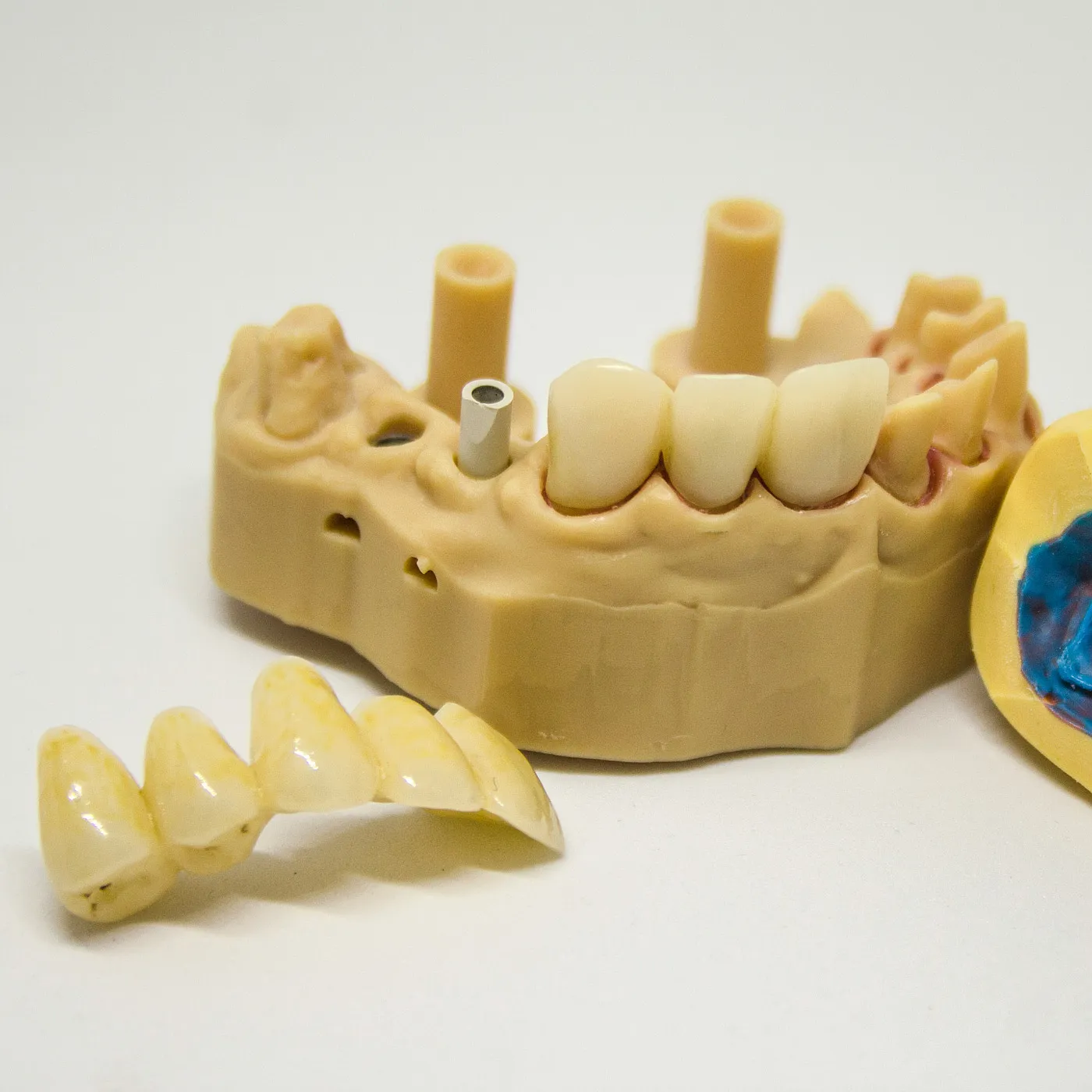
A traditional bridge is made as one connected piece. At each end is a crown that fits over a natural tooth beside the gap, and between them sits the replacement tooth, or pontic. Because the load is shared by teeth on both sides, this design is well suited to replacing a tooth in almost any part of the mouth, including the back where chewing forces are strongest. The neighboring teeth do need to be reshaped to hold their crowns, so a traditional bridge is often a particularly good fit when those teeth already have large fillings or would benefit from crowns anyway. It is the design most people picture when they hear the words dental bridge.
When your dentist may recommend one
- You are missing a tooth with a natural tooth on each side of the space
- The teeth on either side are healthy and strong enough to act as anchors
- Those neighboring teeth already have large fillings or wear
- You would like a fixed replacement that does not come out
- A dental implant is not the right route for you at this time
Why it matters
What filling the gap can do
Leaving a space open can affect more than your smile.
-
Keeps teeth in position
Neighboring teeth can drift or tip into an empty space over time. A bridge helps hold them where they belong.
-
Restores your bite
Chewing is shared more evenly when the gap is filled, rather than falling on the teeth that remain.
-
Supports clear speech
A missing tooth, especially near the front, can change how certain sounds are formed.
-
Completes your smile
The pontic and crowns are shaded and shaped to blend with the teeth around them.
New patient special
$98
A $308 value for your first visit
Visiting us for the first time? Our new patient offer includes:
- Comprehensive exam
- Panoramic X-rays
- Bitewing digital X-rays
- Intraoral photos
- Smile evaluation
- Full gum evaluation
- Oral cancer screening
- TMJ and bite evaluation
- Review of your treatment options
- A written treatment plan
Other ways to replace a tooth
A traditional bridge is one of several options. When only one neighboring tooth can offer support, a cantilever bridge may be considered. When you would rather not reshape the teeth beside the gap, or several teeth are missing, an implant-supported bridge uses implants as the anchors instead. For an overview of how bridges work, visit Dental Bridges.
Book your visit
Close the gap in your smile
Book a visit and we’ll check the teeth around the space and explain whether a traditional bridge or another option is the better fit.

The short answer
A traditional bridge is a fixed replacement for a missing tooth, made as one connected piece with an artificial tooth, called a pontic, held between crowns on the natural teeth on both sides of the gap. The neighboring teeth are reshaped so the crowns can fit over them, and the pontic and crowns are shaded and shaped to blend with the teeth around them. Because the load is shared by teeth on both sides, it suits a gap in almost any part of the mouth and helps keep neighboring teeth from drifting into the space.
Traditional Bridges FAQ
- What makes a bridge traditional?
- A bridge is traditional when it is supported by crowns on the natural teeth at both ends of the gap. The replacement tooth, or pontic, is joined between those crowns so the whole bridge is one connected piece. That two-sided support is the defining feature, and it lets the bridge share chewing forces across the teeth on either side.
- Do the neighboring teeth have to be changed?
- Yes, the teeth on either side of the gap are reshaped so crowns can fit over them. This change is not reversible, which is why your dentist looks closely at those teeth before recommending a bridge. A traditional bridge is often a particularly good fit when those neighboring teeth already have large fillings or would benefit from crowns anyway.
- Can a traditional bridge replace more than one tooth?
- Yes, a traditional bridge can replace more than one tooth in a row when the anchor teeth are strong enough to carry the extra load. Each added replacement tooth puts more chewing force on the crowned teeth at either end. Your dentist will assess those teeth at your exam, and when several teeth are missing an implant-supported bridge may be considered instead.
- How do I clean under a bridge?
- Cleaning under a bridge takes a floss threader, special bridge floss or a small interdental brush. The pontic sits just above the gum, so food can collect beneath it where ordinary floss cannot pass through. Keeping that area clean, along with brushing around the crowned teeth, helps protect the anchor teeth and the gums that support the bridge.
Your dentist
Meet Dr. Emily Marx
A skilled family dentist, Dr. Marx is passionate about helping patients feel comfortable while achieving their best smile. Meet Dr. Marx