
Dental Implants
Implant Supported Dentures in Gladstone
A denture that stays where it belongs.
If your denture slips when you eat, rubs your gums or needs adhesive to stay put, an implant supported denture can change how it feels to wear one. It snaps onto implants in your jaw, then comes out for cleaning whenever you need it to.
Exceptional Dentistry in Gladstone, MO
How an implant supported denture holds
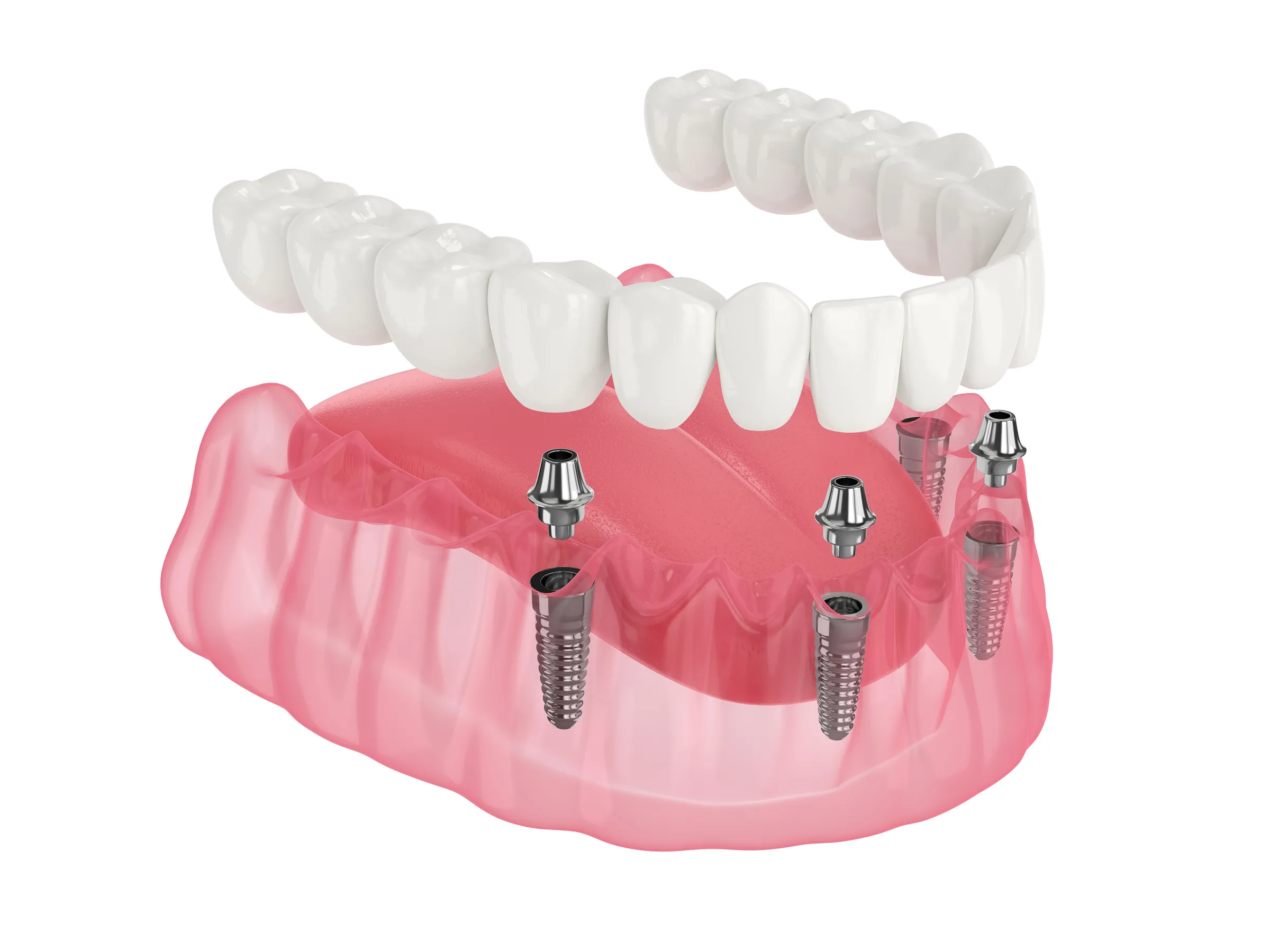
A traditional denture rests on the gums and depends on suction, a close fit and the muscles of your mouth to stay in place. An implant supported denture adds something solid underneath: dental implants placed in the jawbone, topped with attachments that the denture locks onto. The underside of the denture carries matching fittings, so it presses down over the implants with a firm click and stays there until you release it. Because the implants take on much of the biting force, the denture is less likely to shift, lift or rub, and many people find they can bite and chew more naturally. It remains a removable appliance, so you still take it out each day to clean it and the area around each implant. It is used on the lower jaw, the upper jaw or both, and on the upper jaw it can sometimes be designed to leave more of the palate uncovered than a traditional upper denture.
Styles of attachment
Two common ways the denture connects
Your dentist will recommend an attachment style based on your bone, your bite and how you want the denture to feel.
-
Ball or locator attachments
Each implant has its own small attachment, and the denture snaps onto them individually. This is often called a snap-in denture.
-
Bar-retained attachments
A slim metal bar joins the implants along the curve of your jaw, and clips inside the denture fasten onto the bar.
-
Mini implant attachments
Narrower posts can sometimes hold the denture instead. Learn more about mini dental implants.
What changes when your denture is anchored
Anchoring a denture to implants addresses many of the everyday frustrations people describe with a traditional set.
- Less movement — the denture locks onto the implants rather than floating on the gums
- More confident chewing — biting force is shared with the implants, so a wider range of foods may feel manageable
- Clearer speech — a steadier denture is less likely to click or shift while you talk
- Less reliance on adhesive — the attachments do much of the work that paste or powder used to do
- Support for the jaw — implants place the jawbone under load, which can help it keep its shape
Your treatment, stage by stage
Implant supported dentures are planned from the finished smile backward, so the implants end up where the denture needs them. Your dentist will explain the timing of each visit for your case.
- A consultation to review your mouth, your current denture and your goals
- cone beam CT and panoramic X-rays to measure the bone and map the implant positions
- Any extractions that are needed, if you still have teeth in the arch
- Placement of the implants in the jaw
- A healing period while the implants and bone join together
- Impressions or digital impressions and bite records for the new or adapted denture
- Fitting the attachments and the denture, then adjusting the bite and fit
Dental implant consultation
$50
A $608 value
Missing teeth? For only $50, our team will evaluate your oral health and guide you through your implant options. Your consultation includes:
- Comprehensive oral exam
- 3D X-rays (CT scan) for precise planning
- Panoramic X-rays
- Personalized implant treatment plan
- Detailed information on the procedure
- Answers to all your questions
Finding your fit
How it compares with other options
An implant supported denture sits between a traditional denture and a fixed full-arch bridge, and each suits different priorities.
-
Traditional full denture
Rests on the gums with no implants. It is removable and involves no surgery, but tends to move more. See full dentures.
-
Implant supported denture
Snaps onto implants for a secure hold and still comes out each day for cleaning.
-
Hybrid prosthesis
A fixed full arch of teeth attached to implants that only your dentist removes. See our hybrid prosthesis page.
Book a consultation
Stop worrying about a loose denture
Schedule an implant consultation. We will examine your mouth, review your imaging and talk through whether an implant supported denture fits your needs, your goals and your lifestyle.
Still comparing? Our dentures and dental implants pages cover the rest of your tooth replacement options.
The short answer
An implant supported denture, also called an overdenture or snap-in denture, is a removable denture that attaches to dental implants placed in the jawbone. Implants are placed and allowed to join with the bone, then the denture is fitted with matching attachments, such as ball, locator or bar-retained fittings, that click onto them. Because the implants take on much of the biting force, the denture moves far less than one resting on the gums, and it still comes out each day for cleaning.
Implant Supported Dentures FAQ
- What is the difference between an implant supported denture and a regular denture?
- A regular denture rests on the gums and relies on suction, fit and the muscles of your mouth, while an implant supported denture snaps onto implants placed in the jawbone. The implants hold it much more firmly, so it is less likely to shift, lift or rub. Because biting force is shared with the implants, many people find they can bite and chew more naturally.
- Can I take an implant supported denture out?
- Yes, an implant supported denture is removable. It unclips from the implants so you can clean it and the area around each implant every day. Once it is clean, you press it back into place until it locks onto the attachments with a firm click.
- Can my current denture be used with implants?
- Sometimes your current denture can be used with implants. If your existing denture fits well and is in good condition, your dentist may be able to add attachments to its underside. Otherwise a new denture is made to work with the implants, using impressions or digital impressions and bite records.
- How do I care for implants and an overdenture?
- Care involves taking the denture out daily, brushing it with a non-abrasive cleaner, and cleaning gently around each implant or bar with a soft or interdental brush. Keeping the area around the implants clean matters as much as cleaning the denture itself. Regular checkups let your dentist inspect the attachments and make sure the denture still snaps in firmly.
- Will the attachments need maintenance?
- Yes, the attachments need occasional maintenance. The small inserts that grip the implants wear gradually with use, so the denture may not snap in as firmly over time. They are replaced during routine visits to keep the denture holding securely.
Your dentist
Meet Dr. Emily Marx
A skilled family dentist, Dr. Marx is passionate about helping patients feel comfortable while achieving their best smile. Meet Dr. Marx