
Restorative Dentistry
All Ceramic Crowns in Gladstone
Metal-free and made to blend in.
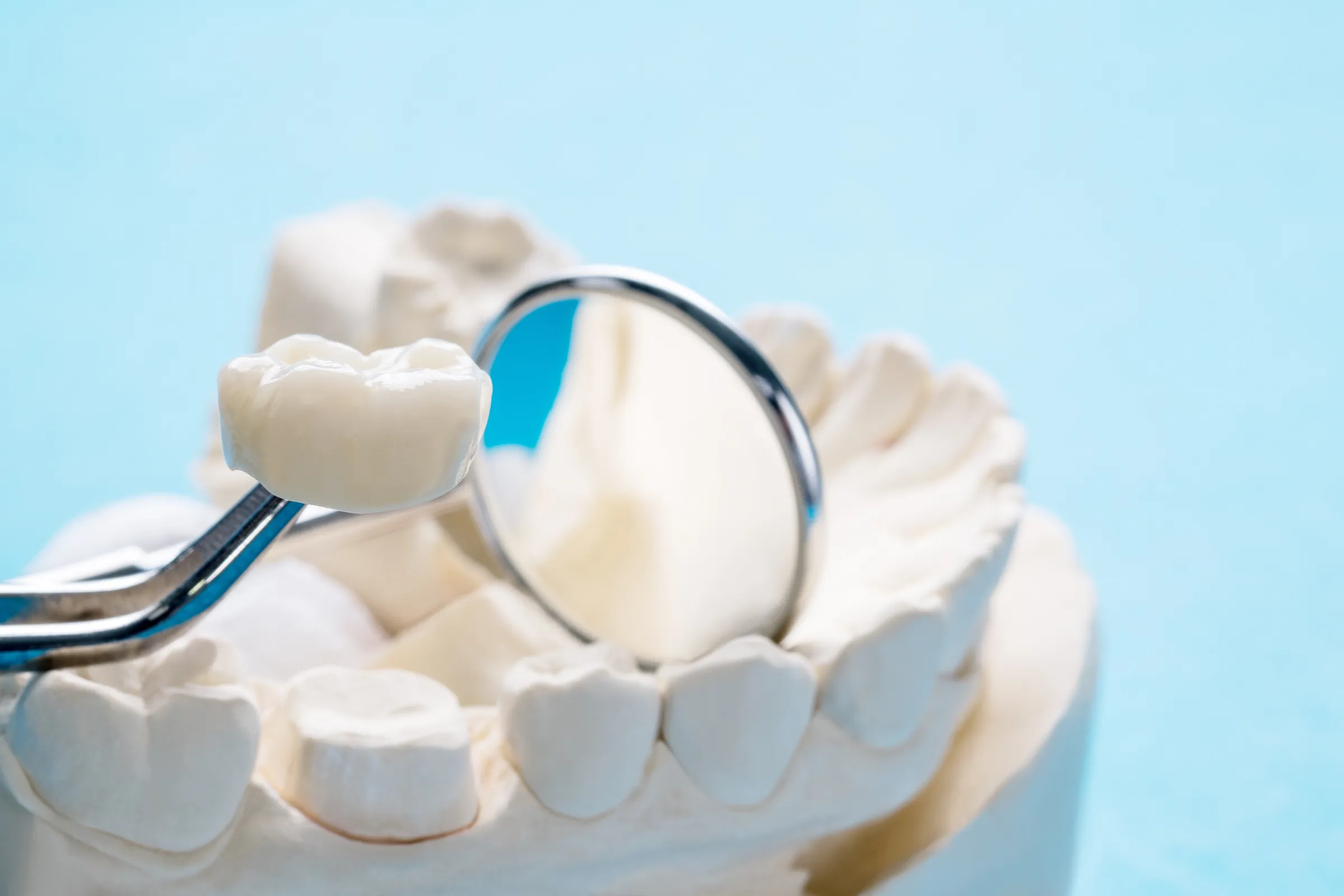
An all-ceramic crown restores a damaged tooth without any metal underneath. It is shaded and shaped to sit naturally beside your own teeth.
Exceptional Dentistry in Gladstone, MO
Why choose a crown with no metal?
Natural enamel is slightly translucent, so light passes into it rather than bouncing straight off. An all-ceramic crown behaves in a similar way, which helps it look like a real tooth up close and in photographs. Because there is no metal layer, there is no dark line that can show at the gumline over time, a concern some people have with older crowns. Ceramic is also a good option for patients who would simply rather avoid metal in their mouth. For those reasons, all-ceramic crowns are often recommended for front teeth and other teeth that show when you smile or talk.
Strengths
What all-ceramic crowns do well
-
Lifelike color
The ceramic is chosen and shaded to match the teeth around it, so the crown does not stand out.
-
Natural translucency
Light passes into the crown the way it does with enamel, giving a softer, more natural look than an opaque surface.
-
No metal
A metal-free option for people with sensitivities or a preference to avoid metal.
-
Gentle on the gums
Ceramic is smooth and well tolerated by the surrounding gum tissue.
Things to weigh
Every crown material involves tradeoffs. Some ceramics are less forgiving than metal under very heavy force, so for a back tooth that takes the brunt of chewing, or for someone who grinds, your dentist may point you toward zirconia crowns or gold crowns instead. An all-ceramic crown may also need a little more tooth reshaping than some alternatives, which your dentist will discuss beforehand. For the basics of when a crown is needed at all, see Dental Crowns.
From preparation to placement
Getting an all-ceramic crown usually involves these steps:
- The tooth is examined and any decay or old filling material is removed
- The tooth is shaped so the crown can fit over it
- A digital impression records the tooth and its neighbors
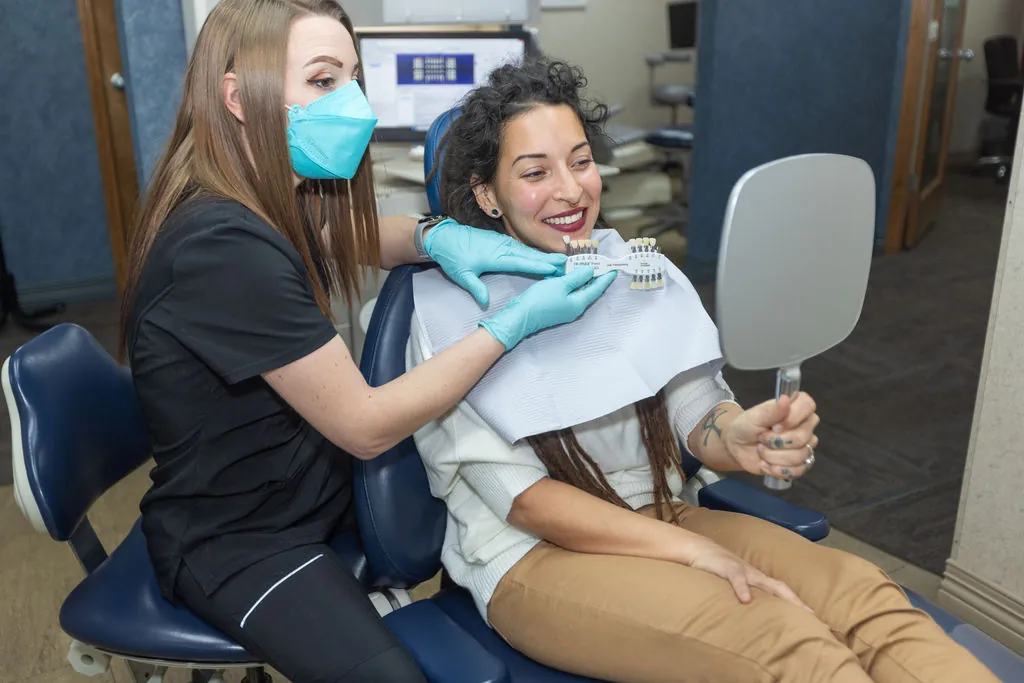
- A shade is selected to match your natural teeth
- A temporary crown protects the tooth while the final crown is made
- The finished crown is checked for fit, bite and color, then bonded in place
New patient special
$98
A $308 value for your first visit
Visiting us for the first time? Our new patient offer includes:
- Comprehensive exam
- Panoramic X-rays
- Bitewing digital X-rays
- Intraoral photos
- Smile evaluation
- Full gum evaluation
- Oral cancer screening
- TMJ and bite evaluation
- Review of your treatment options
- A written treatment plan
Book your visit
Want a crown nobody notices?
Book a visit and we’ll check the tooth, talk through whether all-ceramic is the right fit, and show you how the shade will be matched.
The short answer
An all-ceramic crown is a tooth-shaped cap made entirely of ceramic, with no metal underneath, that covers and restores a damaged tooth. The tooth is cleaned of decay and shaped, a digital impression and a shade are taken, a temporary protects it while the crown is made, and the finished crown is checked for fit, bite and color before it is bonded in place. Because ceramic lets light pass through much like natural enamel, it is often chosen for front and other visible teeth where a natural look matters most.
All Ceramic Crowns FAQ
- Is an all-ceramic crown the same as a porcelain crown?
- Not exactly, because porcelain is one type of dental ceramic and the two terms are often used loosely. An all-ceramic crown is simply one made entirely of ceramic, with no metal core underneath. That metal-free construction is what lets light pass into the crown the way it does with natural enamel. Your dentist can explain which ceramic is being used for your tooth.
- Can all-ceramic crowns be used on back teeth?
- Sometimes, depending on how much force the tooth takes and on your bite. Some ceramics are less forgiving than metal under very heavy force, so a back tooth that takes the brunt of chewing needs careful thought. For heavy chewing areas, or for someone who grinds, your dentist may suggest a tougher material such as zirconia or gold.
- Will an all-ceramic crown stain?
- The glazed ceramic surface resists staining well. It will not whiten along with your natural teeth, though, because whitening does not change the color of a crown. If you plan to whiten, whiten before the crown shade is chosen so the crown can be matched to your brighter teeth.
- How do I care for an all-ceramic crown?
- Care for an all-ceramic crown much like your other teeth, brushing and flossing around it every day. The tooth underneath can still develop decay at the edge of the crown, so cleaning along the gumline matters. Keep up with checkups so your dentist can check the crown and the gums around it. Avoid using your teeth to open packages or to bite very hard objects.
Your dentist
Meet Dr. Emily Marx
A skilled family dentist, Dr. Marx is passionate about helping patients feel comfortable while achieving their best smile. Meet Dr. Marx