Preventive Dentistry
Oral Cancer Screening in Gladstone
A few careful moments that can make a real difference.
Changes in the mouth are often easy to miss on your own. A screening during your dental visit gives a trained eye the chance to notice them.

Exceptional Dentistry in Gladstone, MO
Looking beyond your teeth
Oral cancer can develop on the lips, tongue, cheeks, gums, the floor or roof of the mouth, and the throat. In its early stages it often causes no pain, and the first signs can look like an ordinary sore or a patch of discolored tissue. An oral cancer screening is a simple exam in which your dentist looks over these areas and gently feels for lumps or changes in texture, including along the jaw and neck. It takes little time and is usually part of a regular dental exam. A screening does not diagnose cancer, but it can flag an area that deserves a closer look, so that anything unusual is followed up rather than overlooked.
Warning signs
Changes worth mentioning to your dentist
Many of these have harmless causes, but any that linger should be checked.
-
A sore that does not heal
An ulcer or sore spot in the mouth or on the lip that stays put instead of clearing up.
-
Red or white patches
Areas of tissue that look different in color from the rest of the mouth.
-
Lumps or thickened areas
A bump, rough spot or firm area in the cheek, on the tongue or in the neck.
-
Trouble swallowing or speaking
Ongoing hoarseness, a feeling that something is caught in the throat, or numbness in the mouth.
What happens during a screening
- Your dentist asks about your health history and any changes you have noticed
- The lips, gums, cheeks, tongue and the roof and floor of the mouth are examined
- Your dentist gently feels the jaw, the neck and under the tongue for lumps
- If an area looks unusual, your dentist explains what they saw and what further evaluation may be recommended
Factors that can raise the risk
Anyone can develop oral cancer, but some things are known to increase the risk. They include tobacco in any form, heavy alcohol use, certain types of HPV infection and long-term sun exposure to the lips. Knowing your own history helps your dentist decide what to watch for, and it is one more reason to keep up with your dental exams even when nothing hurts.
New patient special
$98
A $308 value for your first visit
Visiting us for the first time? Our new patient offer includes:
- Comprehensive exam
- Panoramic X-rays
- Bitewing digital X-rays
- Intraoral photos
- Smile evaluation
- Full gum evaluation
- Oral cancer screening
- TMJ and bite evaluation
- Review of your treatment options
- A written treatment plan
Why choose Marx Family Dental for oral cancer screening?
Screening is part of how we care for the whole mouth, not just the teeth. It fits naturally alongside your dental cleaning and the rest of our general dentistry care, so it never needs a separate trip.
Book your visit
Make a screening part of your next visit
If you have noticed a change in your mouth, or you are simply due for a checkup, we are here to help. Book online or call our office.
The short answer
An oral cancer screening is a visual and hands-on exam of the lips, mouth, tongue, throat and neck, done by a dentist to look for sores, patches or lumps that could be early signs of cancer or other conditions. Your dentist asks about your health history, examines the gums, cheeks, tongue and the roof and floor of the mouth, and gently feels the jaw, neck and the area under the tongue. A screening does not diagnose cancer, but it can flag an area that deserves a closer look, and it is usually part of a regular dental exam.
Oral Cancer Screening FAQ
- Does an oral cancer screening hurt?
- No, the exam is gentle. Your dentist looks over the tissues of your mouth and lightly presses on areas of the jaw and neck to feel for lumps or changes in texture. Nothing is cut or removed during a routine screening. If any part of the exam feels uncomfortable, let your dentist know and they can adjust how they check that area.
- Who should be screened?
- Adults of any age can benefit from an oral cancer screening, whether or not they have known risk factors. Anyone can develop oral cancer, and the early signs often cause no pain, so a regular check helps changes get noticed. Some things are known to raise the risk, including tobacco in any form, heavy alcohol use, certain types of HPV infection and long-term sun exposure to the lips. Your dentist can advise you on how often screening makes sense for you.
- What if my dentist finds something?
- Many changes turn out to be harmless, so finding an unusual area is not the same as a diagnosis. If something needs a closer look, your dentist will explain what they saw and talk with you about the next steps, which may include further testing. The aim of a screening is that anything unusual is followed up rather than overlooked.
- Can I check my own mouth between visits?
- Yes, looking in a mirror for sores, patches or lumps that do not go away is a good habit. Watch for a sore that does not heal, red or white patches, a lump or thickened area, or ongoing hoarseness or trouble swallowing. Many of these have harmless causes, but any that linger should be checked. Contact our office if something concerns you.
- Is the screening a separate appointment?
- No, an oral cancer screening is usually done as part of a regular dental exam. It takes little time and fits naturally alongside your dental cleaning and checkup. That means it never needs a separate trip, and keeping up with routine exams keeps your screenings up to date too.
Your dentist
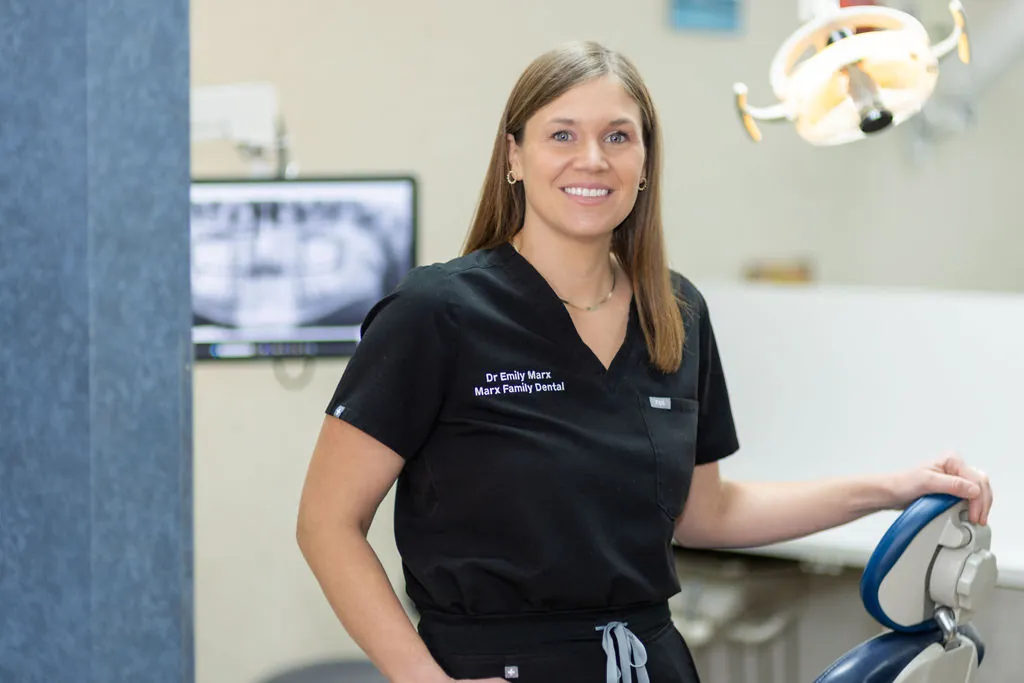
Meet Dr. Emily Marx
A skilled family dentist, Dr. Marx is passionate about helping patients feel comfortable while achieving their best smile. Meet Dr. Marx