General Dentistry
TMJ Treatment in Gladstone
Relieve jaw pain and improve your quality of life.
Your temporomandibular joints, just in front of your ears, are the hinges that let your lower jaw open, close and move smoothly. When they become damaged or misaligned, the result can be pain, discomfort and a range of disruptive symptoms.
Exceptional Dentistry in Gladstone, MO
What causes TMJ / TMD problems?
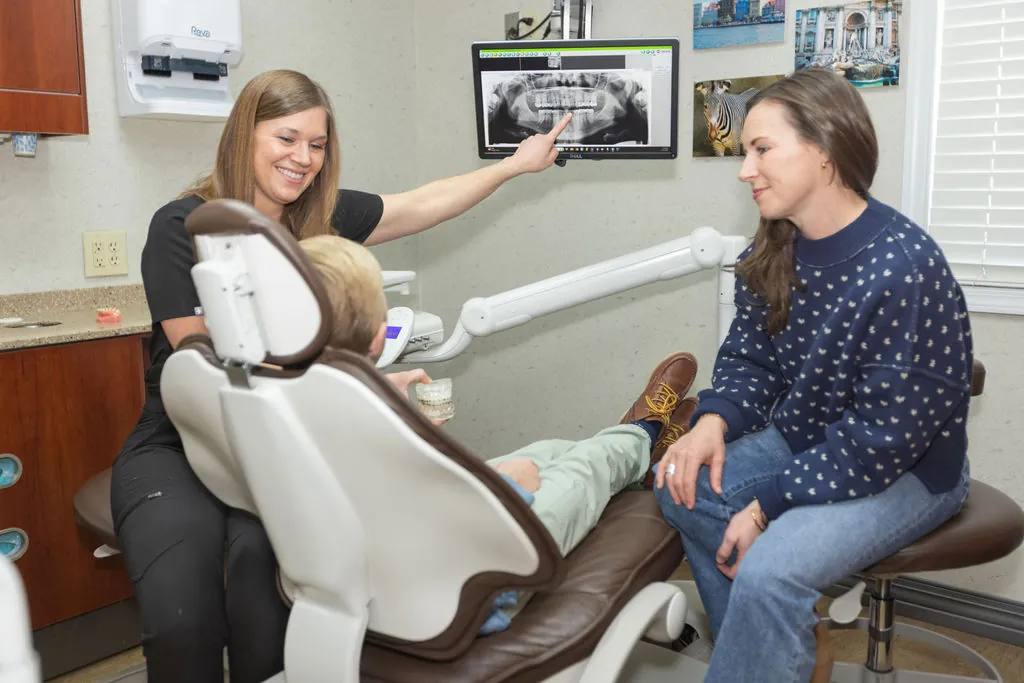
Temporomandibular joint dysfunction, or TMD, develops when the jaw joints that power chewing and speaking are damaged or thrown off balance. A bad bite can unsettle the joints, an injury can leave long-term discomfort, and grinding or clenching, often driven by stress, can inflame and damage them over time. Because TMD symptoms are often mistaken for other conditions, a proper diagnosis is essential. We start with a thorough examination of your jaw, teeth and bite, check for signs of grinding, clenching or joint misalignment, and use digital X-rays or 3D imaging when needed to see the joints clearly.
Common symptoms of TMD
- Clicking, popping or grating sounds in the jaw
- Persistent headaches or neck pain
- Limited ability to open the mouth wide
- Pain when chewing, yawning or speaking
- Earaches, pressure or ringing (tinnitus)
- Jaw locking when opening or closing
- Sore or tender teeth
- Worn, broken or cracked teeth
Treatment options
Personalized TMJ / TMD treatment
Once we identify the cause of your symptoms, we create a customized plan to relieve your pain and restore proper jaw function.
-
Custom night guards or splints
Protect your teeth from grinding and reduce strain on the jaw.
-
Bite adjustments or orthodontics
For bites that are severely misaligned. Orthodontics
-
Muscle relaxation techniques
Help reduce tension in the jaw muscles.
-
Physical therapy
Improves joint mobility and relieves discomfort.
-
Laser therapy
Reduces inflammation and improves joint function.
-
A whole-body approach
Plans that address headaches, ear discomfort and neck tension too.
Why Choose Marx Family Dental for TMJ Treatment?
Our team has years of experience diagnosing and treating TMJ disorders. We prioritize conservative, non-surgical treatments that relieve symptoms, and use 3D imaging and digital X-rays to pinpoint the cause of your pain. You’ll receive personalized, compassionate care in a stress-free environment, and we’ll keep you informed at every step.
New patient special
$98
A $308 value for your first visit
Visiting us for the first time? Our new patient offer includes:
- Comprehensive exam
- Panoramic X-rays
- Bitewing digital X-rays
- Intraoral photos
- Smile evaluation
- Full gum evaluation
- Oral cancer screening
- TMJ and bite evaluation
- Review of your treatment options
- A written treatment plan
Book your visit
Don’t let TMJ pain hold you back
If you’re experiencing jaw discomfort, headaches or any of the symptoms of TMD, don’t wait to seek treatment. Schedule a consultation, and we’ll help you find relief and improve your quality of life.
The short answer
TMD is a disorder of the temporomandibular joints, the hinges just in front of the ears that let the lower jaw open, close and move, and it can cause jaw pain, clicking, headaches and earaches. Diagnosis starts with a thorough exam of the jaw, teeth and bite, checking for grinding, clenching or joint misalignment, with digital X-rays or 3D imaging when needed. Treatment is usually conservative, such as custom night guards or splints, bite adjustments, muscle relaxation techniques, physical therapy or laser therapy.
TMJ Treatment FAQ
- What is TMD, and how does it differ from TMJ?
- TMJ refers to the temporomandibular joint itself, while TMD refers to disorders or dysfunctions affecting that joint. Everyone has two temporomandibular joints, one on each side, just in front of the ears. TMD develops when those joints are damaged or thrown off balance, for example by a bad bite, an injury or grinding and clenching. In everyday conversation people often say TMJ when they mean the disorder.
- What causes the clicking sound in my jaw?
- A clicking or popping sound is often due to misalignment in the jaw joint or damage to the cartilage within the joint. As the jaw opens and closes, a joint that is out of position can shift or catch, which produces the sound. Clicking on its own is not always a problem, but it is worth checking if it comes with pain, stiffness or locking. Your dentist can examine the joint and your bite to look for the cause.
- How is TMD diagnosed?
- TMD is diagnosed through a comprehensive exam that evaluates your bite, how your jaw moves and the condition of your teeth. Your dentist looks for signs of grinding, clenching or joint misalignment, such as worn or cracked teeth. Digital X-rays or 3D imaging are used when needed to see the joints clearly. Because TMD symptoms are often mistaken for other conditions, a careful diagnosis comes before any treatment plan.
- Can stress cause TMD?
- Yes, stress can contribute to TMD. Stress often leads to habits like clenching or grinding, which can inflame and damage the jaw joints over time and worsen or cause symptoms. Many people grind or clench during sleep without realizing it. A custom night guard and muscle relaxation techniques are two ways to reduce that strain.
- Are there non-invasive treatments for TMD?
- Yes, and conservative, non-surgical treatments are where care usually begins. Custom night guards, physical therapy and relaxation techniques are often effective non-invasive options. A night guard protects the teeth from grinding and reduces strain on the jaw, while therapy and relaxation work on joint mobility and muscle tension. Your plan is based on what is causing your symptoms.
- How long does TMD treatment take?
- The length of TMD treatment depends on the severity of your condition. Many patients experience relief within weeks to months. Simpler cases may respond quickly to a night guard or relaxation techniques, while a bite that needs adjusting can take longer. Your dentist will explain the expected timeline once the cause of your symptoms is clear.
- Can TMD cause ear problems like ringing or pain?
- Yes, TMD can lead to earaches, pressure or ringing in the ears, known as tinnitus. The temporomandibular joints sit very close to the ears, so inflammation or strain in the joint can be felt as ear discomfort. This is one reason TMD is often mistaken for other conditions. A whole-body approach to treatment can address ear discomfort, headaches and neck tension along with the jaw.
- What should I do if my jaw locks?
- If your jaw locks, try to relax and gently massage the area, then contact us for evaluation and treatment. Forcing the jaw open or closed can add strain to the joint. A jaw that locks when opening or closing is one of the common symptoms of TMD. An exam can find what is causing it and what will help.
Your dentist
Meet Dr. Emily Marx
A skilled family dentist, Dr. Marx is passionate about helping patients feel comfortable while achieving their best smile. Meet Dr. Marx