General Dentistry
Sleep Apnea Treatment in Gladstone, MO
Tired of being tired? Take back your sleep and your health.
Sleep apnea does more than disrupt your rest; left untreated it can lead to serious health complications. If you experience snoring, fatigue or morning headaches, a customized treatment can help you breathe easier, sleep better and wake up refreshed.
Exceptional Dentistry in Gladstone, MO
What is sleep apnea?
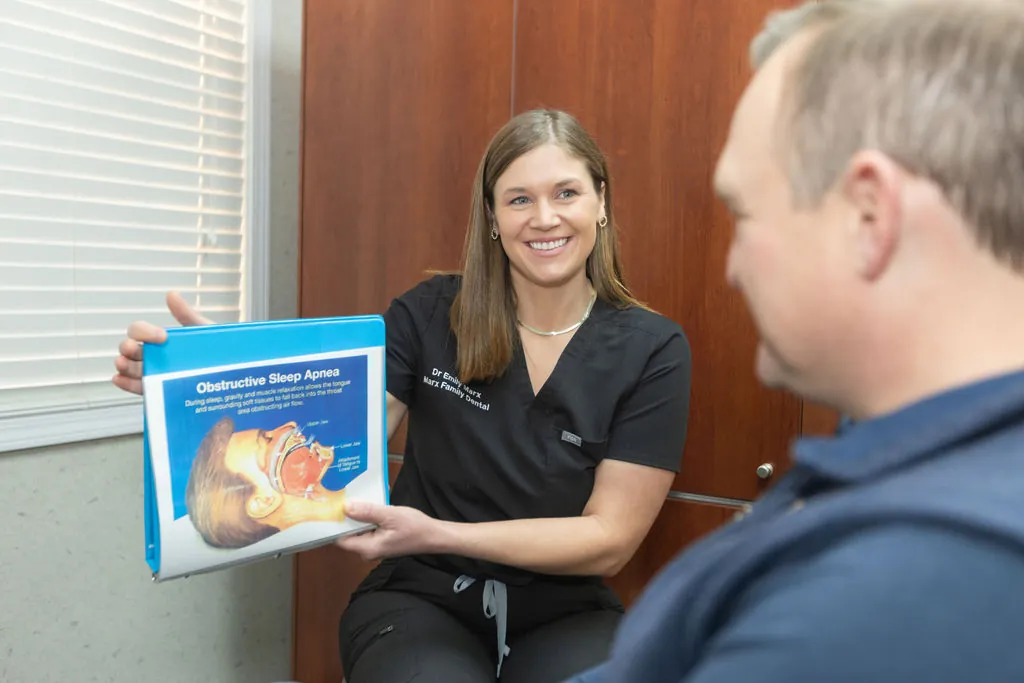
Sleep apnea is a serious sleep disorder that causes repeated interruptions in breathing throughout the night. These pauses, sometimes lasting 10 seconds or longer, keep your body from reaching deep, restorative sleep and leave you tired, sluggish and unfocused. Most people with sleep apnea aren’t aware it is happening, yet it can occur hundreds of times a night. The most common type, obstructive sleep apnea, happens when the tongue and soft tissues collapse against the back of the throat and block airflow, so the brain repeatedly wakes you to restore normal breathing.
Signs and symptoms
If these symptoms sound familiar, it may be time for an evaluation.
- Excessive daytime fatigue, even after a full night’s rest
- Loud snoring, often noticed by a partner
- Waking up gasping or choking
- Morning headaches or dry mouth
- Difficulty concentrating or memory loss
Why treatment matters
Left untreated, obstructive sleep apnea can lead to chronic fatigue and daytime drowsiness, high blood pressure, memory, focus and mood disturbances, and an increased risk of heart disease, stroke and diabetes. Seeking treatment could significantly improve your health and quality of life.
15+
Years of clinical research
Oral appliance therapy
For patients with mild to moderate sleep apnea, we offer a comfortable, non-invasive alternative to CPAP: a custom oral appliance. The mouthpiece gently repositions your jaw and tongue to keep your airway open throughout the night, so you can breathe easily and sleep without interruption.
Benefits
Why patients prefer oral appliances
-
Custom-fit comfort
Designed for your unique bite and jaw alignment.
-
Easy to use
No bulky machines, wires or masks: just a small, portable appliance.
-
Better sleep
Deeper, uninterrupted rest, and quieter nights for you and your partner.
-
Easy to travel with
Unlike CPAP machines, oral appliances are small, lightweight and easy to pack.
Why Choose Marx Family Dental for Sleep Apnea?
Our team has advanced training in dental sleep medicine and provides custom sleep apnea solutions tailored to your symptoms and lifestyle, using the latest diagnostic tools. Most medical insurance plans cover oral appliance therapy, and our team will help you navigate your benefits.
Book your visit
Wake up feeling rested
Don’t let sleep apnea drain your energy, health and quality of life. Schedule your sleep apnea consultation, and our team will help you find a comfortable, effective way to rest easy and wake up refreshed.
The short answer
Oral appliance therapy is a treatment for mild to moderate obstructive sleep apnea that uses a custom mouthpiece to gently reposition the jaw and tongue and keep the airway open during sleep. Treatment begins with an evaluation of symptoms such as loud snoring, daytime fatigue, morning headaches or waking up gasping, followed by an appliance designed for your bite and jaw alignment. It offers a quiet, portable alternative to CPAP, with no masks, wires or bulky machines, and helps you reach deeper, uninterrupted rest.
Sleep Apnea Treatment FAQ
- What is sleep apnea?
- Sleep apnea is a serious sleep disorder in which breathing repeatedly stops during sleep. In obstructive sleep apnea, the most common type, the tongue and soft tissues collapse against the back of the throat and block airflow, so the brain repeatedly wakes you to restore normal breathing. These pauses keep the body from reaching deep, restorative sleep, which leads to fatigue and snoring. Left untreated, it can lead to high blood pressure and an increased risk of heart disease, stroke and diabetes.
- How do I know if I have sleep apnea?
- Common signs of sleep apnea include loud snoring, morning headaches, waking up gasping or choking, and daytime fatigue even after a full night’s rest. Most people with sleep apnea aren’t aware it is happening, and a partner is often the first to notice the snoring. Difficulty concentrating, memory loss and a dry mouth in the morning can also be clues. If you suspect sleep apnea, schedule an evaluation so your symptoms can be looked at properly.
- What is the difference between oral appliance therapy and CPAP?
- CPAP keeps the airway open with a mask and air pressure, while oral appliance therapy uses a custom mouthpiece to gently reposition the jaw and tongue. The appliance is designed for your bite and jaw alignment, so there are no bulky machines, wires or masks involved. Many people find it a quieter, more comfortable alternative, and it is small and lightweight enough to pack easily for travel.
- Is oral appliance therapy covered by insurance?
- Most medical insurance plans, not just dental plans, cover oral appliance therapy. What applies to you depends on your own plan and benefits. Our team will help you navigate your benefits so you know where you stand before treatment.
- Can an oral appliance help with snoring?
- Yes, oral appliances reduce snoring by preventing airway blockages. Snoring happens when airflow is partly obstructed by the tongue and soft tissues at the back of the throat. By gently repositioning the jaw and tongue, the appliance helps keep that space open, which means quieter nights for you and your partner.
- How long does it take to get used to an oral appliance?
- Most patients adjust to an oral appliance within a few nights to a couple of weeks. The mouthpiece is custom-fit to your bite and jaw alignment, which helps it feel comfortable to wear. If anything feels off while you are adjusting, let our team know so the fit can be checked.
- Will an oral appliance cure my sleep apnea?
- No, an oral appliance does not make sleep apnea go away, but it manages the symptoms by keeping the airway open while you sleep. With the airway open, breathing, sleep quality and overall health can improve. The appliance works while you are wearing it, so using it each night as directed is what keeps those benefits going.
- What if I have severe sleep apnea?
- Oral appliance therapy is most effective for mild to moderate sleep apnea, so severe cases may need a different approach. Severe sleep apnea may require CPAP or combination therapy. Our team will look at your symptoms and help determine the right approach for you.
Your dentist
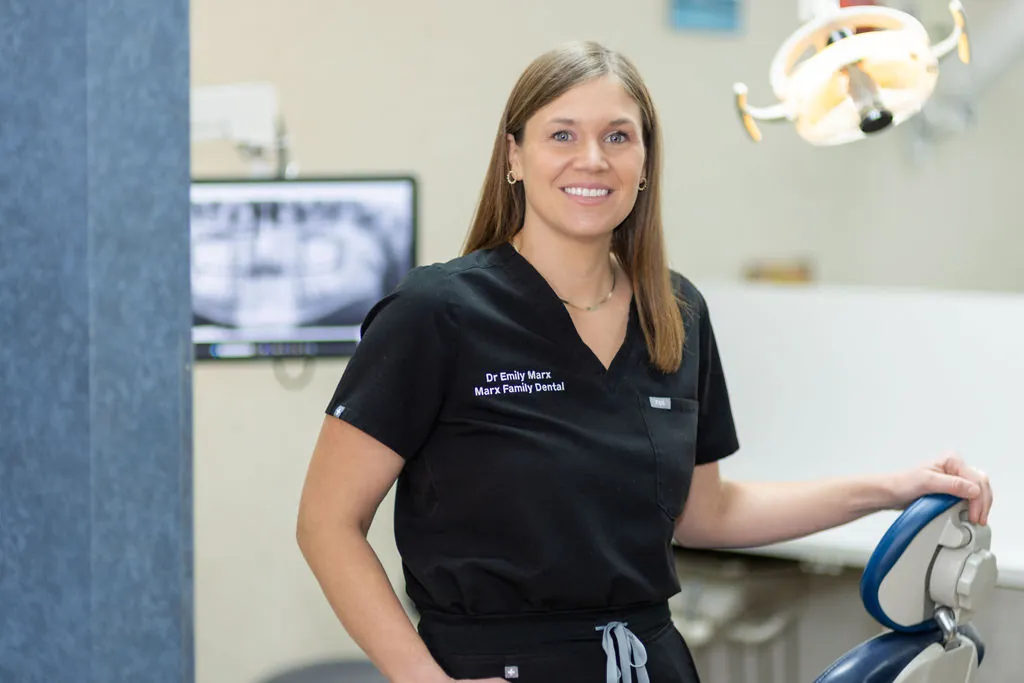
Meet Dr. Emily Marx
A skilled family dentist, Dr. Marx is passionate about helping patients feel comfortable while achieving their best smile. Meet Dr. Marx