Restorative Dentistry
Gladstone Dental Bridges
Restore your smile and your oral health.
Missing a tooth, whether in the front or back of your mouth, can affect both your oral health and your confidence. A dental bridge is a permanent, fixed way to replace one or more missing teeth.
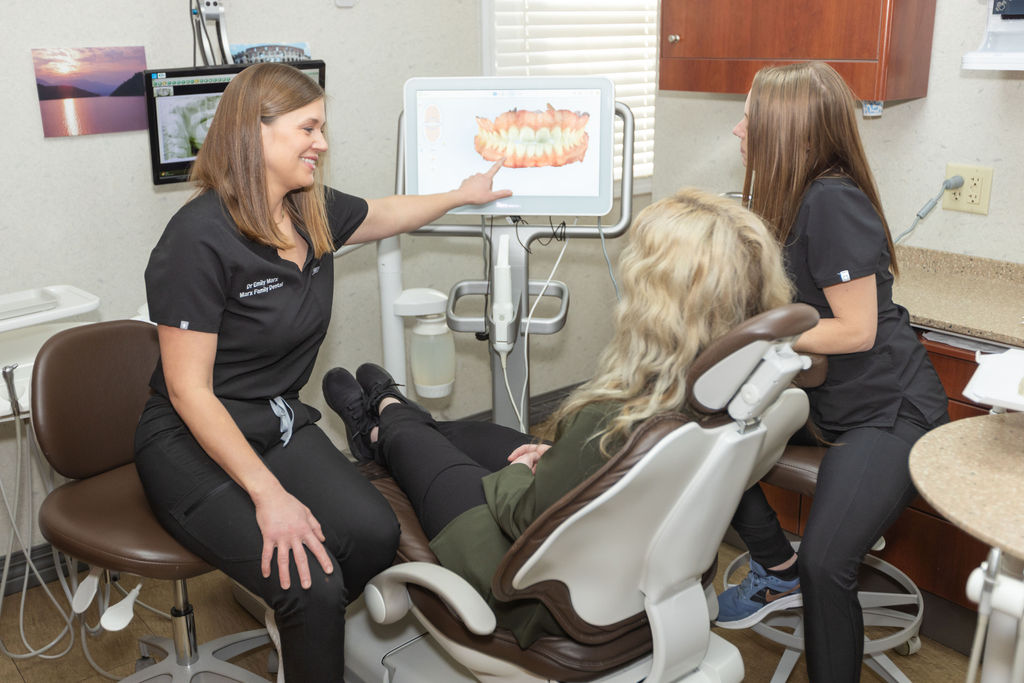
Exceptional Dentistry in Gladstone, MO
What is a dental bridge?
A dental bridge is a fixed appliance that replaces one or more missing teeth. It is designed to look, feel and function like your natural teeth, with a durable, seamless appearance. The bridge anchors to the healthy teeth on either side of the gap, called abutment teeth, with a replacement tooth, called a pontic, in the middle. Our team has placed hundreds of dental bridges for patients of all ages, and we use 3D digital imaging and impressions to custom-craft each one so it fits your bite and facial structure.
How the process works
The process typically takes two visits: one for preparation and impressions, and another for final placement.
- Preparation — the abutment teeth are shaped so crowns can fit over them
- Fabrication — a custom bridge is crafted to match your smile
- Placement — the bridge is securely bonded to the abutment teeth
10–15
Years or longer, with proper care
Built to last
With proper care, dental bridges can last 10–15 years or longer. Regular dental visits and good oral hygiene are key. Bridges are designed to blend seamlessly with your natural teeth and restore your ability to chew, speak and smile with confidence.
Solutions for missing teeth
Your tooth replacement options
We offer several reliable ways to replace missing teeth and restore your smile.
-
Dental bridges
A permanent, fixed solution for replacing one or more missing teeth.
-
Dental implants
A durable, lifelike option that replaces the tooth root and crown. About implants
-
Partial dentures
A removable appliance that replaces multiple missing teeth. About dentures
-
Implant-supported bridges
We also offer implant-supported bridges and full smile restorations.
Why Choose Marx Family Dental for Your Bridge?
Your comfort is our priority: our team makes every step of the process gentle and pain-free, with a focus on long-term success. We offer flexible financing plans and accept most insurance providers, so high-quality care stays accessible. Financing & insurance
Bridge types
Which bridge fits the gap?
A bridge can be supported in different ways:
-
Traditional Bridges
A traditional bridge is the most common type of dental bridge.
-
Cantilever Bridges
A cantilever bridge is a dental bridge that is anchored on only one side.
-
Implant Supported Bridge
An implant supported bridge is a fixed row of replacement teeth held in place by dental implants rather than by natural teeth.
New patient special
$98
A $308 value for your first visit
Visiting us for the first time? Our new patient offer includes:
- Comprehensive exam
- Panoramic X-rays
- Bitewing digital X-rays
- Intraoral photos
- Smile evaluation
- Full gum evaluation
- Oral cancer screening
- TMJ and bite evaluation
- Review of your treatment options
- A written treatment plan
Book your visit
Schedule your dental bridge consultation
If you are missing a tooth, don’t wait to restore your smile and protect your oral health. We offer personalized consultations to help you choose the best solution for your needs, and our welcoming Gladstone office is ready to serve you and your family.
The short answer
A dental bridge is a fixed appliance that replaces one or more missing teeth by anchoring a replacement tooth, called a pontic, to the healthy abutment teeth on either side of the gap. The process typically takes two visits: the abutment teeth are shaped and impressions are taken, then the custom bridge is bonded into place. A bridge restores your ability to chew, speak and smile with confidence, and with proper care and regular dental visits it can last 10–15 years or longer.
Dental Bridges FAQ
- How long do dental bridges last?
- With proper care, dental bridges can last 10–15 years or longer. Regular dental visits and good oral hygiene are key to reaching that range. Daily brushing and flossing around the bridge protect the abutment teeth that hold it in place. At your checkups, your dentist can look at the bridge and the supporting teeth and catch any problems early.
- Are dental bridges permanent?
- Yes, a bridge is fixed to the abutment teeth and is not removable by the patient. It is bonded securely in place, so it stays in your mouth while you eat, speak and sleep. Because it cannot be taken out, it is cleaned in place along with your natural teeth. Your dentist may recommend special floss for reaching under the replacement tooth.
- Does getting a dental bridge hurt?
- The area is numbed during preparation, so the procedure is generally comfortable. Our team makes every step of the process as gentle as possible. Some patients may experience mild sensitivity afterward. Let us know if it lingers, so your dentist can check the fit and your bite.
- How do I care for my dental bridge?
- Brush and floss daily, paying special attention to the area around the bridge. Food and plaque can collect under the replacement tooth, so your dentist may recommend special floss for cleaning there. Keeping the abutment teeth healthy matters, because they support the whole bridge. Regular dental visits let your dentist check the bridge and the gums around it.
- Can a dental bridge replace multiple teeth?
- Yes, a bridge can replace one or more missing teeth. How many it can replace depends on the number of abutment teeth available for support. When natural teeth cannot carry the load, an implant-supported bridge anchored on dental implants is another option. Your dentist will look at the teeth around the gap and explain which approach fits.
- What’s the difference between a bridge and an implant?
- A bridge relies on the adjacent teeth for support, while an implant replaces the tooth root and is anchored directly into the jawbone. To place a bridge, the abutment teeth are shaped so crowns can fit over them. An implant does not need the neighboring teeth to hold it, because it has its own root in the bone. Your dentist will explain how each option would work for your gap.
- Is a dental bridge covered by insurance?
- Many insurance plans cover part of the cost of a dental bridge. Check with your provider to see what your plan includes. Our team accepts most insurance providers and can assist with claims. We also offer flexible financing plans to help keep care accessible.
- How long does it take to get a dental bridge?
- The process typically takes two visits: one for preparation and impressions, and another for final placement. At the first visit, the abutment teeth are shaped so crowns can fit over them and impressions are taken. A custom bridge is then crafted to match your smile and bite. At the second visit, the bridge is securely bonded to the abutment teeth.
Your dentist
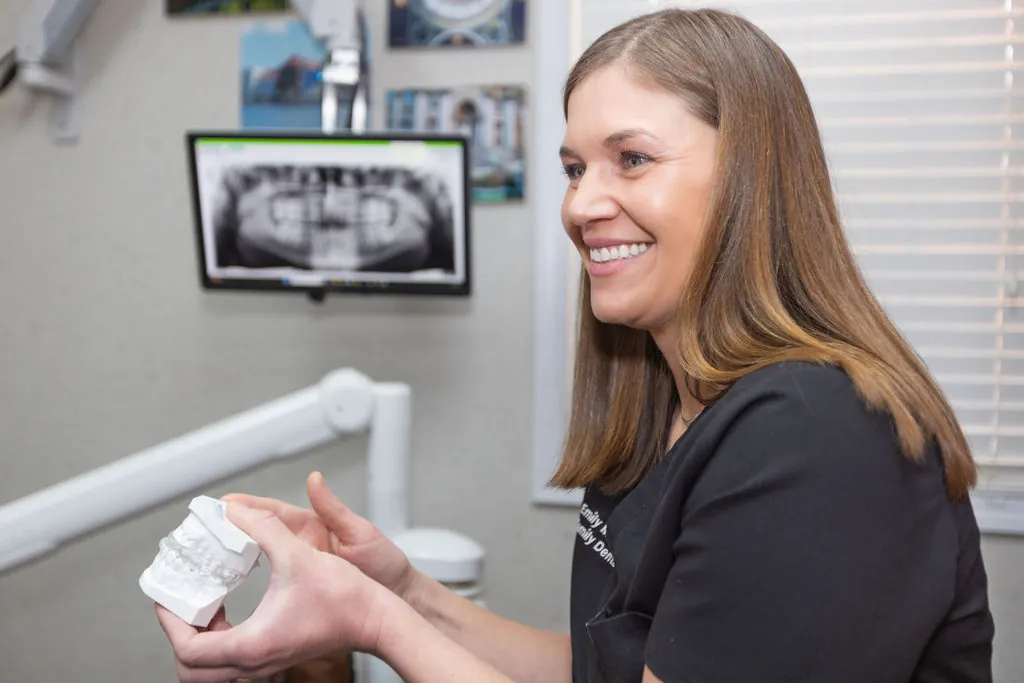
Meet Dr. Emily Marx
A skilled family dentist, Dr. Marx is passionate about helping patients feel comfortable while achieving their best smile. Meet Dr. Marx