
Preventive Dentistry
Dental Sealants in Gladstone
A simple shield for the teeth that do the most chewing.
The back teeth have deep grooves that bristles can’t always clean. Sealants smooth those grooves over so there is less for decay to hold on to.
Exceptional Dentistry in Gladstone, MO
How sealants protect your teeth
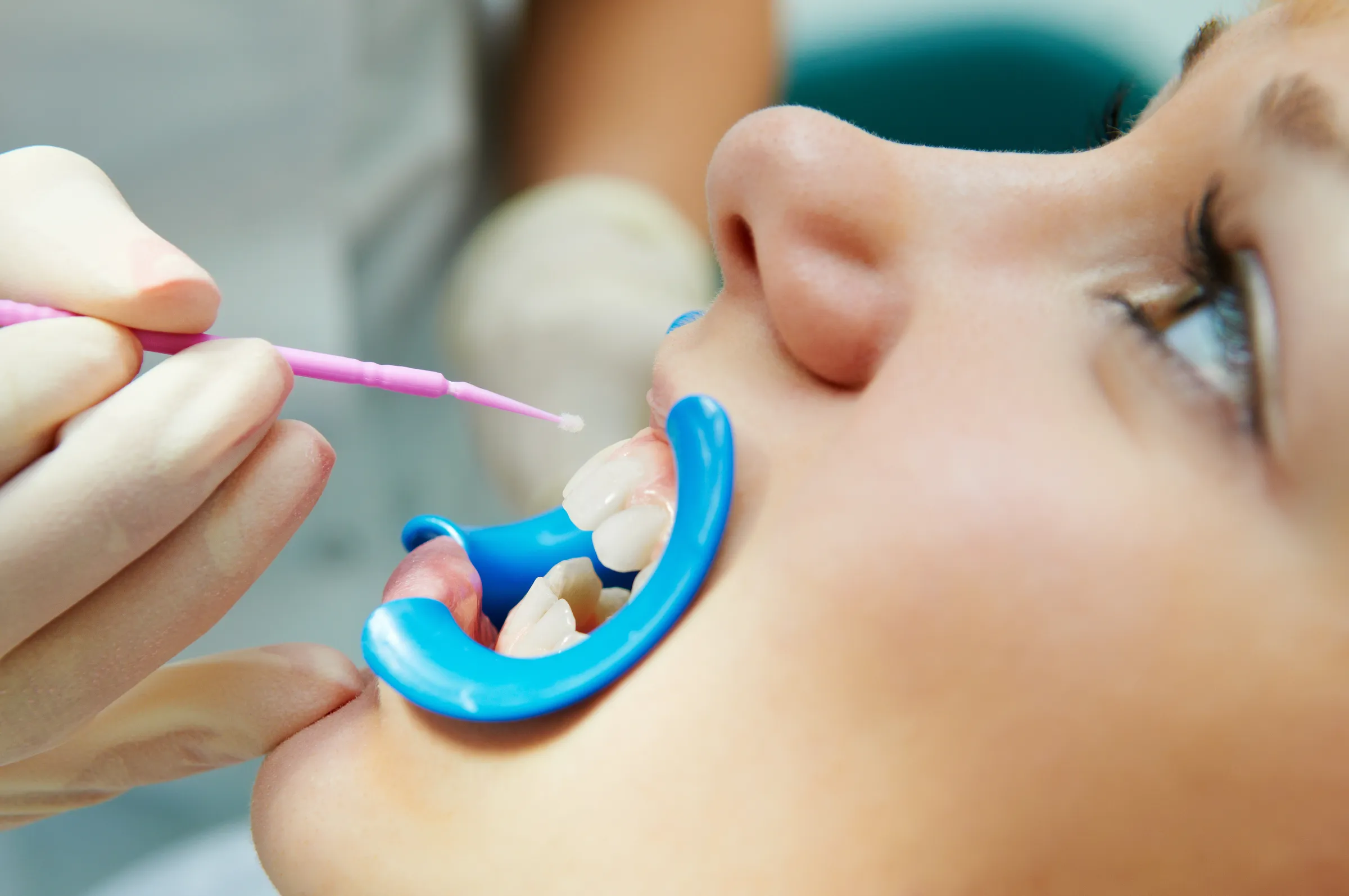
Molars and premolars are covered in small pits and fissures that help grind food, but those same grooves can be narrower than a toothbrush bristle. Food particles and bacteria settle into them, and over time the acids bacteria produce can wear through the enamel and start a cavity. A sealant is a thin liquid coating that your dentist paints into those grooves, where it bonds to the tooth and hardens into a smooth, protective layer. Because nothing is drilled or removed, the process is quick and gentle, which makes it well suited to children. Sealants add a layer of protection on top of good brushing, flossing and regular cleanings, rather than replacing them.
What to expect
Placing a sealant
The whole process happens at the chair and involves no needles or drilling.
- The tooth is cleaned and dried so the sealant can bond well
- A mild solution roughens the enamel slightly to help the coating grip
- The tooth is rinsed and dried again
- The sealant is painted into the grooves and hardened with a curing light
- Your dentist checks the bite and makes sure the surface feels smooth
Who they help
Sealants for kids, teens and adults
-
Children
Sealants are often placed on permanent back teeth soon after they come in, when the grooves are most vulnerable. They fit naturally into pediatric dentistry visits.
-
Teens
Busy schedules and snacking can make home care harder, so an extra layer of protection may be worthwhile.
-
Adults
Adults with deep grooves and no fillings in those teeth may also benefit. Your dentist can tell you whether sealants make sense for you.
New patient special
$98
A $308 value for your first visit
Visiting us for the first time? Our new patient offer includes:
- Comprehensive exam
- Panoramic X-rays
- Bitewing digital X-rays
- Intraoral photos
- Smile evaluation
- Full gum evaluation
- Oral cancer screening
- TMJ and bite evaluation
- Review of your treatment options
- A written treatment plan
Keeping sealants in good shape
Sealants can wear over time, so your dentist checks them at each cleaning and checkup and can repair or reapply them if needed. If a groove already has early decay, a sealant is not the right fix; your dentist may suggest a dental filling instead. Tools such as DIAGNOdent can help your dentist check grooves for hidden decay first.
Book your visit
Ask about sealants at your next visit
Wondering whether sealants are a good idea for your child or yourself? Book online or call, and we’ll look at the teeth together and talk it through.
The short answer
A dental sealant is a thin, tooth-colored plastic coating painted onto the chewing surfaces of the back teeth to help protect them from decay. The tooth is cleaned, dried and lightly roughened, then the liquid sealant is painted into the deep pits and grooves and hardened with a curing light, with no needles or drilling. It smooths over grooves that can be narrower than a toothbrush bristle, so food and bacteria have less to hold on to, and it is often placed on children’s back teeth soon after they come in.
Dental Sealants FAQ
- Are sealants visible?
- Sealants are hard to notice because they are usually clear or tooth-colored. They sit on the chewing surfaces of the back teeth, which are not easily seen when you talk or smile. Because the sealant is painted only into the grooves rather than over the whole tooth, it does not change how your smile looks.
- Does getting a sealant hurt?
- Getting a sealant involves no drilling and no needles, so the process is quick and gentle. The tooth is cleaned, a mild solution roughens the enamel slightly, and the sealant is painted on and hardened with a curing light. Most children simply need to keep their mouth open while the tooth is prepared and coated, which is why sealants fit easily into pediatric dentistry visits.
- Can I eat normally afterward?
- The sealant is hardened with a curing light before you leave the chair, so it is already set when your visit ends. Before you go, your dentist checks your bite and makes sure the surface feels smooth. If there is anything to avoid afterward, your dentist will let you know.
- How long do sealants last?
- How long a sealant lasts varies from person to person. Sealants can wear over time, so your dentist checks them at each cleaning and checkup. When a sealant shows wear, it can be repaired or reapplied to keep the grooves protected.
- Do sealants replace brushing and flossing?
- No, sealants add protection on top of good brushing, flossing and regular cleanings rather than replacing them. They only cover the grooves on the chewing surfaces of the back teeth. The rest of each tooth and the spaces between teeth still need daily care to help keep decay away.
Your dentist
Meet Dr. Emily Marx
A skilled family dentist, Dr. Marx is passionate about helping patients feel comfortable while achieving their best smile. Meet Dr. Marx